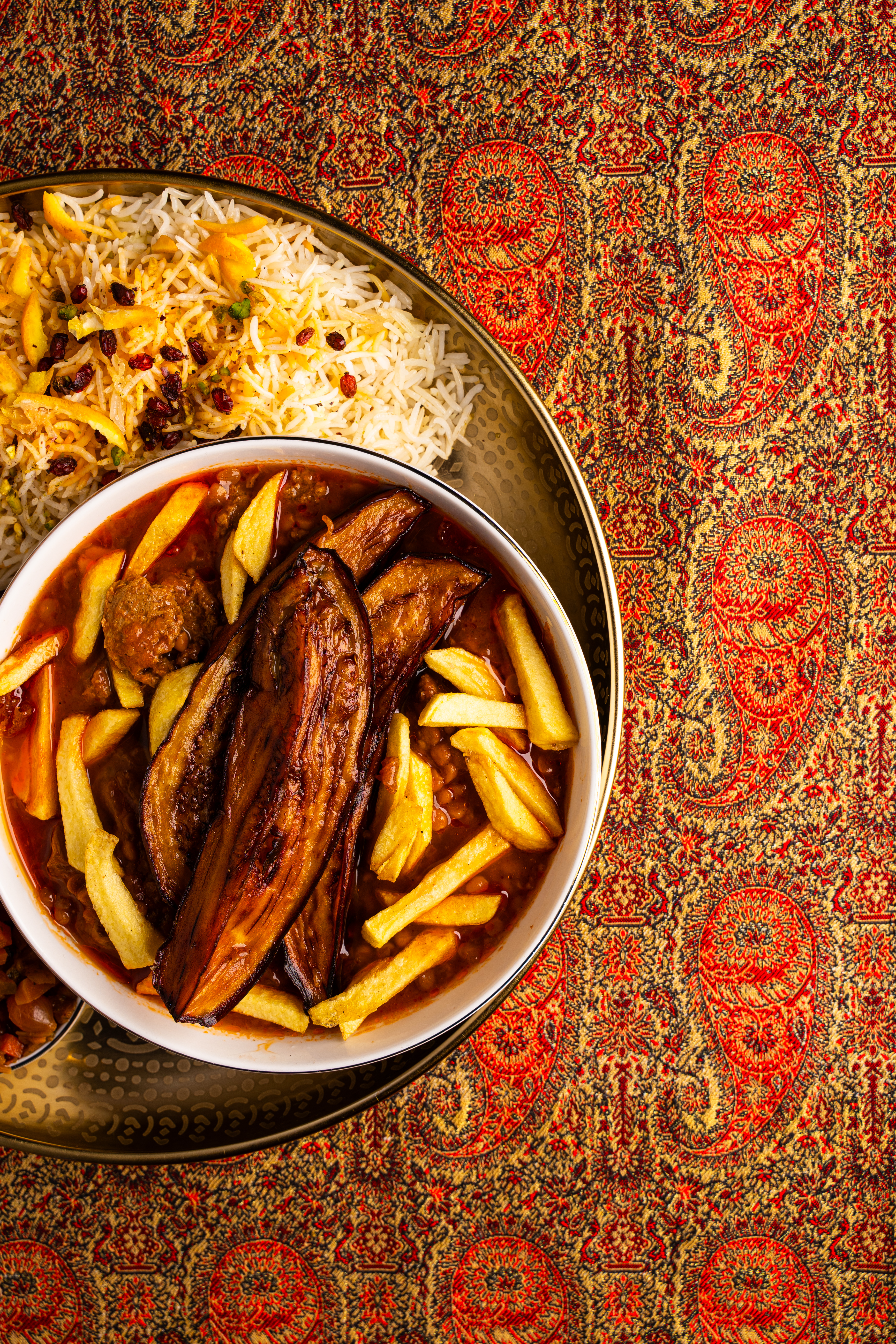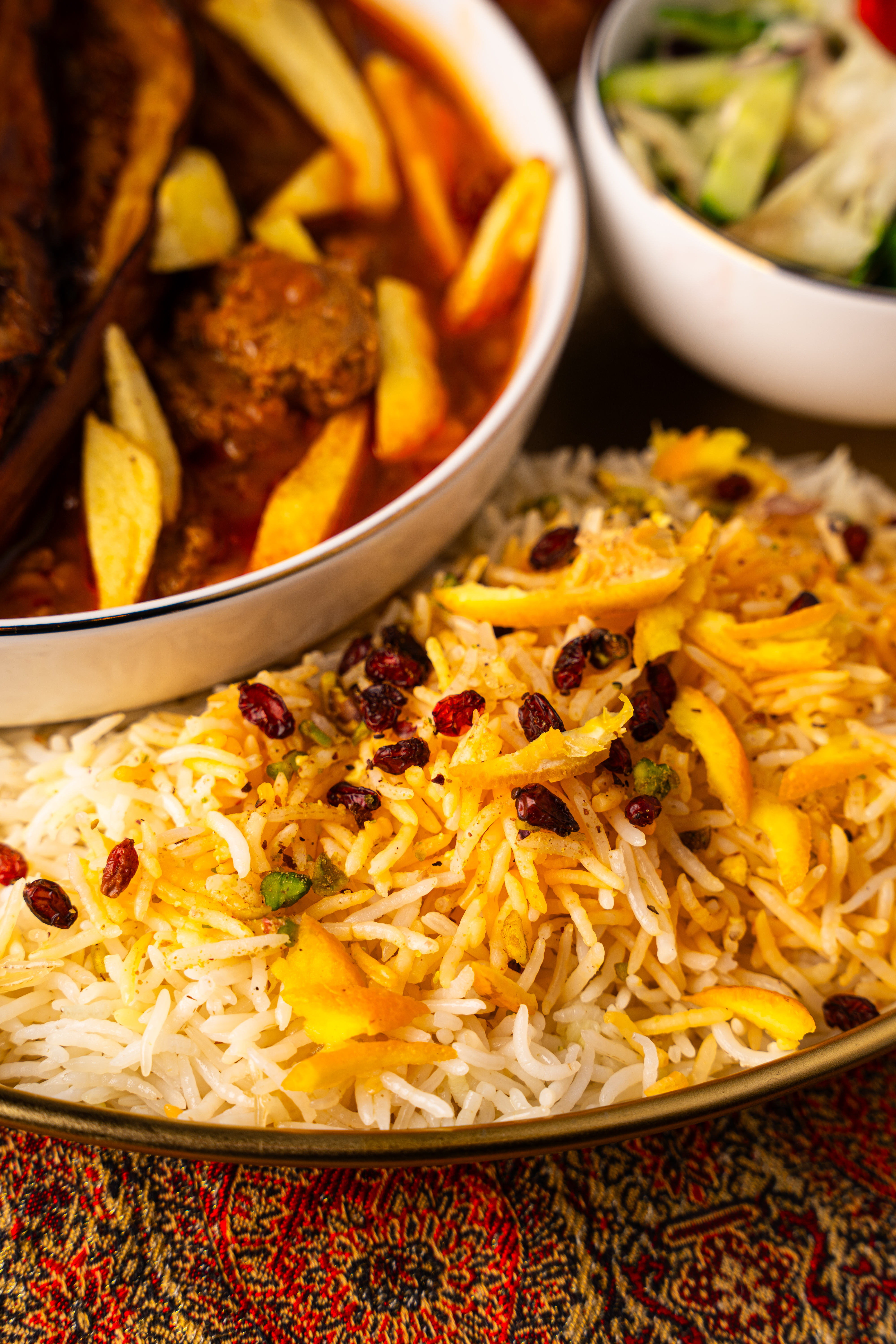
Ghormeh Sabzi is Iran's national dish — a slow-cooked herb stew made with lamb, kidney beans, and a blend of dried herbs, finished with the sharp tang of dried Persian limes. Ask any Iranian what dish represents their country's food, and most will answer without hesitation: Ghormeh Sabzi. It is comfort food, celebration food, and Sunday-lunch food all in one pot.
What is Ghormeh Sabzi made of?
The name says it all. Ghormeh means fried or sautéed, and sabzi means herbs. The defining step — and the one that separates a good Ghormeh Sabzi from a great one — is frying the herbs until they are dark and concentrated before adding them to the stew.
The herb mix typically includes:
- Parsley — the backbone of the dish
- Dried fenugreek — earthy, slightly bitter, essential
- Dried chives (sometimes leek) — adds depth
- Spinach — in some regional variations
These are cooked slowly in oil until deeply fragrant, then combined with bone-in lamb, kidney beans, and whole dried limes (limoo amani). The dried limes release a sour, slightly smoky flavour that is impossible to replicate with anything else.
How long does Ghormeh Sabzi take to cook?
This is not a weeknight dinner. A proper Ghormeh Sabzi takes at least 3–4 hours of slow cooking after the herbs are prepared — and many Persian home cooks prefer 5 or 6 hours for the richest flavour. The lamb becomes fall-off-the-bone tender, the herbs lose their raw edge, and the dried limes slowly perfume the whole pot.
At DENA's, Dena prepares Ghormeh Sabzi fresh every day using this traditional method. The result is a stew with real depth — dark, glossy, fragrant, nothing like a shortcut version.
What does Ghormeh Sabzi taste like?
The flavour is hard to describe if you've never had it. It is earthy and herbal, with a distinctive sour note from the dried limes that cuts through the richness of the lamb. It is savoury, complex, and slightly bitter in the best possible way.
It is not spicy. Persian food is built on aromatic complexity — saffron, dried fruits, herbs, and slow cooking — rather than chilli heat. If you are nervous about trying something unfamiliar, Ghormeh Sabzi is a surprisingly accessible entry point: deeply flavourful, not overwhelming.
What is served with Ghormeh Sabzi?
Always rice — specifically saffron rice. The white and golden grains of Persian polo absorb the dark stew beautifully. Many Persian tables also add a side of mast-o moosir (yogurt with dried shallots and dill) to balance the richness.
At DENA's, Ghormeh Sabzi is served with saffron rice as part of the dinner menu — see the menu for current prices. You can also pair it with our starters like Kuku Sabzi or Mast-o Moosir for a full Persian experience.
Why is Ghormeh Sabzi considered Iran's national dish?
Ghormeh Sabzi has been eaten in Iran for over 500 years. It appears at Persian New Year (Nowruz) tables, at weddings, at family reunions, and at ordinary Friday lunches. It is the dish that Iranian mothers make for their children when they come home — and the dish those children miss most when they move abroad.
It is also deeply regional. Every family has their own version: slightly different herb ratios, different levels of sourness, some with walnuts added, some with dried cranberries. At DENA's, the recipe comes from Dena's own family tradition — brought from Iran and refined over decades of cooking.
Where to eat Ghormeh Sabzi in Den Haag
Authentic Ghormeh Sabzi is rare in the Netherlands. Making it properly requires time, technique, and the right dried ingredients — shortcuts produce something unrecognisable.
DENA'S Persian Fusion Restaurant on Prinsestraat 62 in Den Haag is one of the few places where you can eat it the way it is made in Iran. Open Tuesday, Wednesday and Sunday from 12:00 to 20:00, and Thursday to Saturday from 12:00 to 22:00. No Monday service.
You can reserve a table online, or order for pickup via Uber Eats.
If you want to explore more of the menu before you come, our guide on what to order at a Persian restaurant is a good starting point. And if Ghormeh Sabzi sounds like your kind of dish, you will also want to know about the other Iranian classics on our menu.
Frequently Asked Questions
- What is Ghormeh Sabzi?
- Ghormeh Sabzi is Iran's national dish — a slow-cooked stew made with sautéed herbs (parsley, fenugreek, chives), bone-in lamb, kidney beans, and dried Persian limes. It is earthy, slightly sour, and always served with saffron rice.
- Where can I eat Ghormeh Sabzi in Den Haag?
- DENA'S Persian Fusion Restaurant serves Ghormeh Sabzi at Prinsestraat 62, 2513 CE Den Haag. Open Tuesday–Sunday, closed Monday.
- Is Ghormeh Sabzi spicy?
- No. Ghormeh Sabzi is not spicy. Its flavour comes from herbs, dried limes, and long slow cooking — not chilli heat. Persian cuisine is aromatic, not hot.
- What does Ghormeh Sabzi taste like?
- Earthy, herbal, and slightly sour from the dried limes, with rich tender lamb. It is savoury and complex — one of the most distinctive flavours in Iranian cooking.
- How long does Ghormeh Sabzi take to cook?
- A proper Ghormeh Sabzi takes 3–6 hours of slow cooking. The herbs are sautéed first to concentrate their flavour, then the whole stew simmers low and slow until the lamb is fall-off-the-bone tender.
Ready to try Iran's national dish? Reserve your table at DENA's on Prinsestraat 62, Den Haag.
Book a table View the menu