Nowruz — the Persian New Year — falls on the spring equinox, which in 2026 is Friday, March 20. It is one of the oldest celebrations on earth, observed for over 3,000 years across Iran, Afghanistan, Central Asia, and Iranian communities around the world. And at its heart, as with most great human traditions, is food.
At DENA's, Nowruz is not just a date on the calendar. It is the season when the dishes Dena grew up with — herb-laden, saffron-golden, and deeply connected to the land — feel most alive. Here is what Nowruz means, and what ends up on the table.
What Is Nowruz?
Nowruz means "new day" in Persian. It marks the exact moment the sun crosses the vernal equinox — the first day of spring — and with it, the start of a new year in the Iranian calendar. Families gather, houses are cleaned from top to bottom, new clothes are worn, and gifts are exchanged.
A central feature of Nowruz is the Haft Sin — a ceremonial table set with seven symbolic items, each starting with the letter S in Persian. Sabzeh (sprouted wheat or lentils), Sib (apple), Seer (garlic), Senjed (dried lotus berry), Somaq (sumac), Serkeh (vinegar), and Samanu (a sweet wheat pudding). Together they represent health, prosperity, love, and renewal.
What Do Iranians Eat on Nowruz?
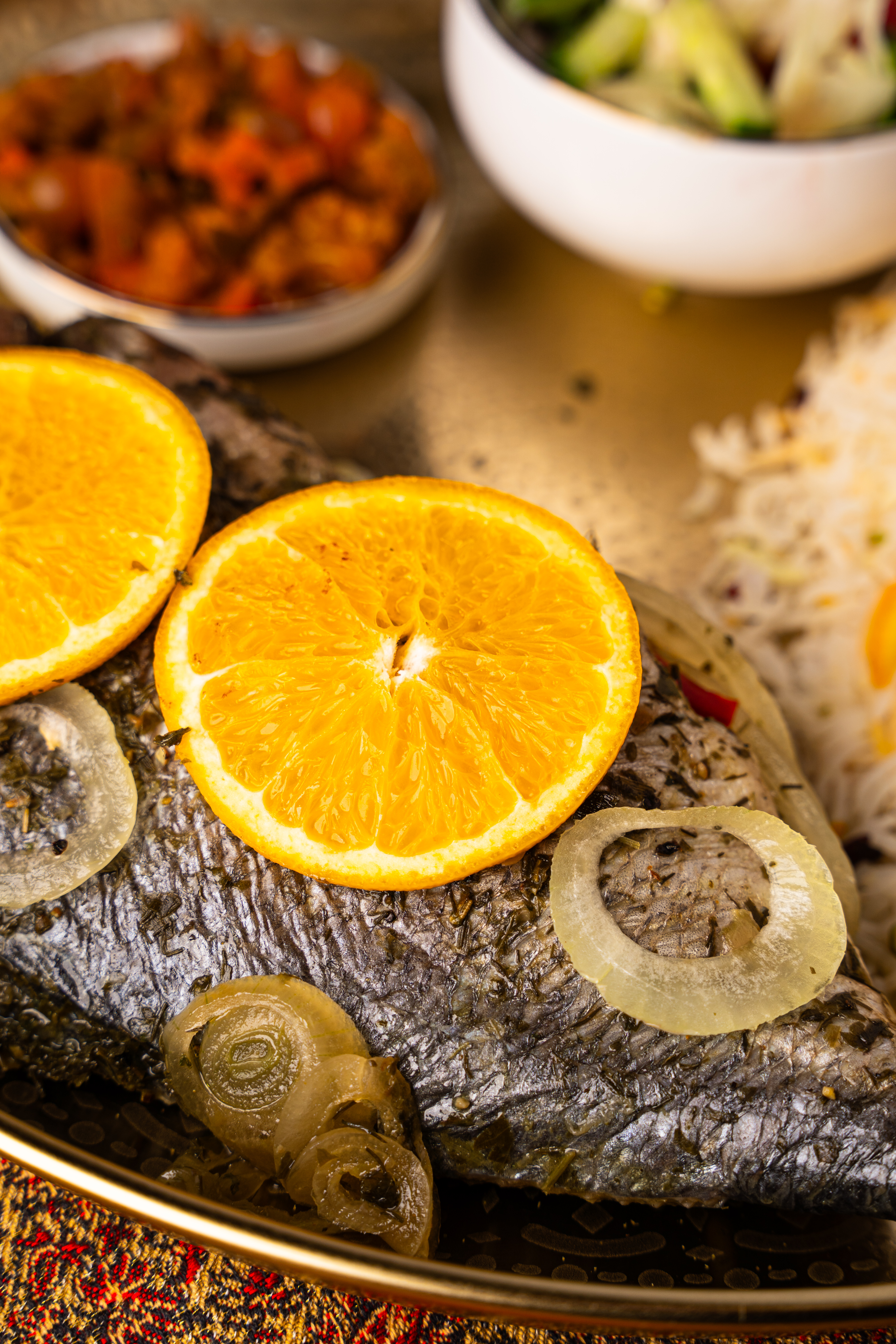
The Nowruz meal has a clear centrepiece: Sabzi Polo Mahi — herb rice with fish. Every component carries meaning.
- Sabzi Polo (herb rice): fragrant long-grain rice cooked with copious amounts of fresh herbs — fenugreek, dill, parsley, coriander, and sometimes chives. The vivid green colour signals the arrival of spring.
- Mahi (fish): a symbol of life and fertility. Fish represents abundance and the promise of a prosperous year. In Iran, it is typically a whole whitefish, pan-fried or oven-roasted.
Together, herb rice and fish are the Nowruz dish — the one millions of Iranian families prepare on the same evening, year after year.
Why Is Kuku Sabzi So Important at Nowruz?
Kuku Sabzi is a dense Persian herb frittata, and it is one of the most Nowruz-specific foods in the entire Iranian culinary tradition. Made almost entirely of fresh green herbs — fenugreek, parsley, dill, and coriander — bound together with eggs, it is eaten as a starter or side dish during the New Year celebrations.
The symbolism is direct: green means growth, renewal, and the natural world coming back to life. Kuku Sabzi is basically spring on a plate.
At DENA's, Kuku Sabzi is served as a sandwich — crispy on the outside, herb-packed inside, and honest about what Persian cooking does best: letting quality ingredients speak for themselves.
Other Foods of the Nowruz Season
Beyond Sabzi Polo Mahi and Kuku Sabzi, a few more dishes appear regularly on Iranian New Year tables:
- Ash-e Reshteh: a thick noodle soup with herbs, beans, and kashk (fermented whey). The noodles represent the threads of fate — eating them on Nowruz is said to bring good luck for the year.
- Reshteh Polo: rice cooked with noodles, another New Year favourite in some regions.
- Nowruz sweets: rice flour cookies (Nan-e Berenji), almond cookies (Nan-e Badami), and chickpea cookies (Nan-e Nokhodchi) are baked in large batches and shared with guests throughout the thirteen days of celebration.
The season lasts until Sizdah Bedar — the thirteenth day — when families traditionally leave the house and spend the day outdoors, picnicking and throwing the Haft Sin sprouted greens into running water.
How to Experience Nowruz Food in Den Haag
You do not need to travel to Tehran to taste the flavours of Nowruz. At DENA'S Persian Fusion Restaurant on Prinsestraat 62 in Den Haag, the kitchen serves the same herb-forward, saffron-rich cooking that defines Iranian home cooking at its best — year-round, but especially meaningful in March.
Our Sabzi Polo Mahi, prepared daily with the freshest North Sea catch and finished with Persian herbs and saffron butter, carries the spirit of this Nowruz classic in every bite. And the Kuku Sabzi sandwich is as close as you can get to a Nowruz lunch in Den Haag. See the menu for current prices.
Opening hours: Tuesday, Wednesday and Sunday 12:00–20:00, Thursday–Saturday 12:00–22:00. Monday closed. Reserve your table — especially in the week of March 20, when we love to cook for guests who want to feel what this season means.
Nowruz Mubarak — Happy New Year.
Frequently Asked Questions
- When is Nowruz 2026?
- Nowruz 2026 falls on Friday, March 20 — the exact moment of the spring equinox. It marks the start of the Persian New Year and is celebrated by over 300 million people worldwide.
- What food do Iranians eat on Nowruz?
- The signature Nowruz dish is Sabzi Polo Mahi — herb rice with fish. Kuku Sabzi (herb frittata), Ash-e Reshteh (noodle soup), and festive sweets like rice cookies are also traditional.
- What is Kuku Sabzi?
- Kuku Sabzi is a Persian herb frittata made with large quantities of fresh green herbs — fenugreek, parsley, dill, and coriander. Its green colour symbolises spring and renewal, making it a Nowruz staple. DENA's serves it as a sandwich.
- Why is fish eaten during the Persian New Year?
- Fish represents life, fertility, and new beginnings in Persian tradition. Serving fish with herb rice on Nowruz is a centuries-old custom that symbolises prosperity and abundance for the coming year.
- Where can I eat Persian Nowruz food in Den Haag?
- DENA'S Persian Fusion Restaurant at Prinsestraat 62, 2513 CE Den Haag serves authentic Persian cuisine including fresh fish and Kuku Sabzi. Open Tuesday–Sunday from 12:00. Reservations via TheFork.
Celebrate the Persian New Year with a meal at DENA's — Prinsestraat 62, Den Haag.
Reserve a table View the menu